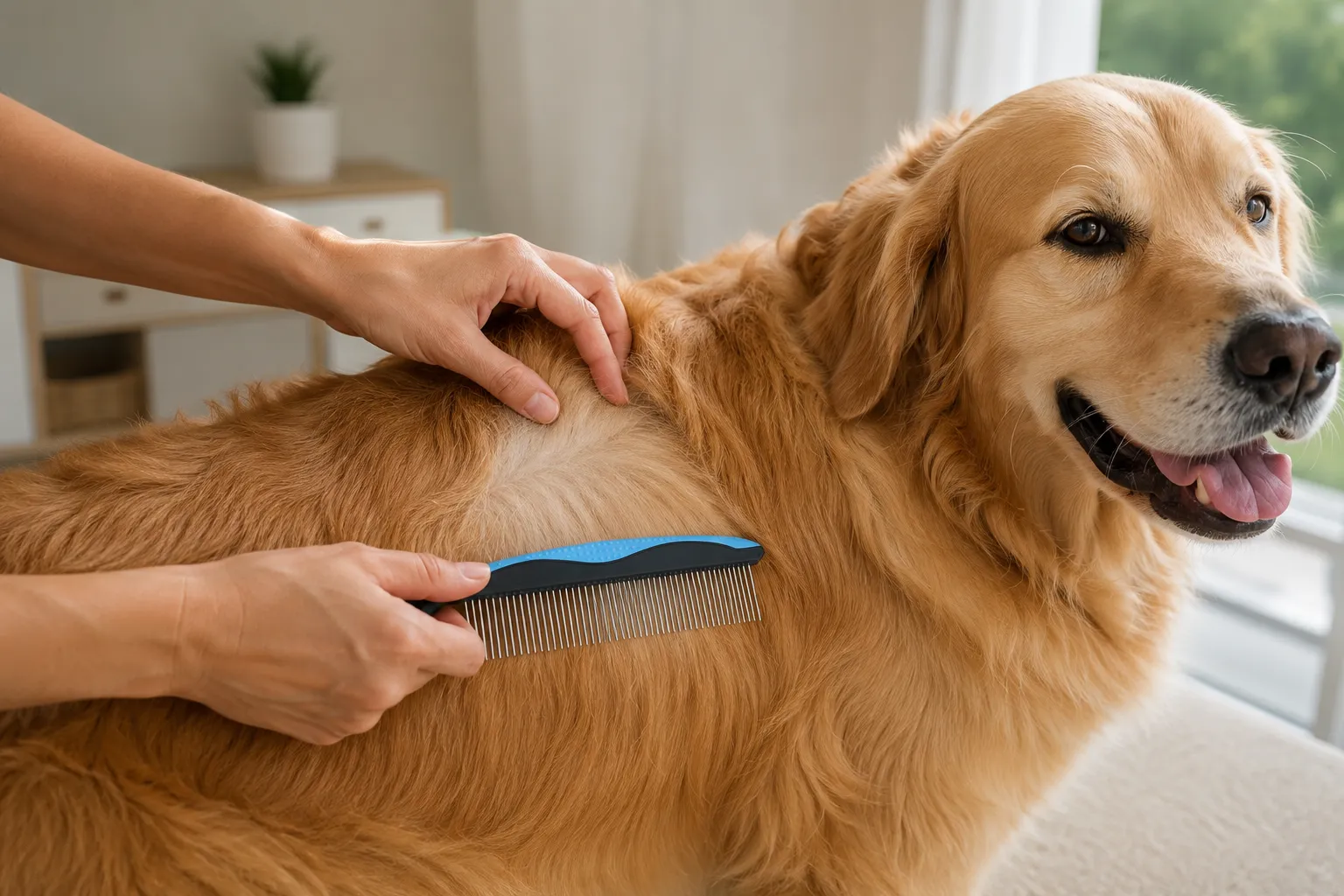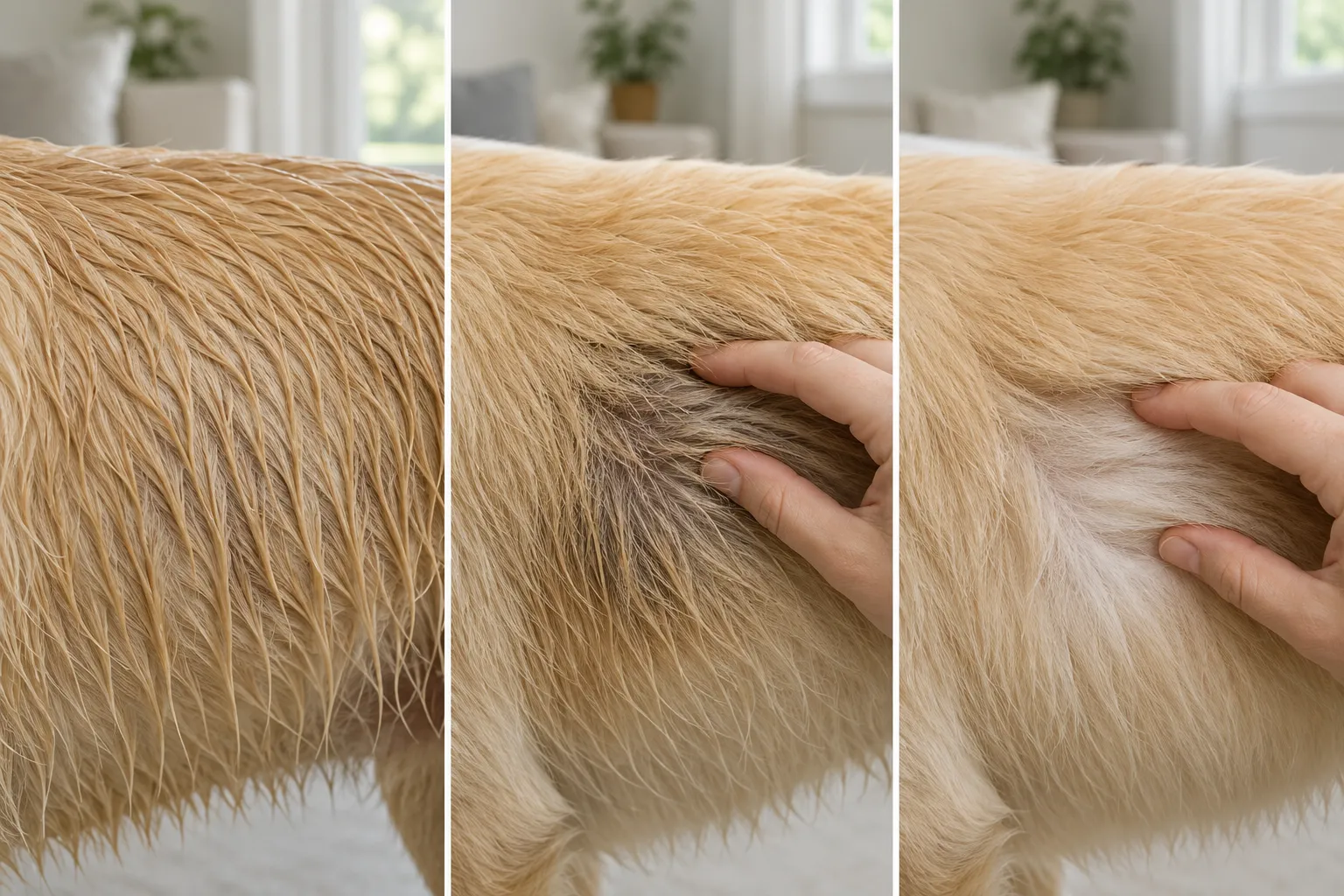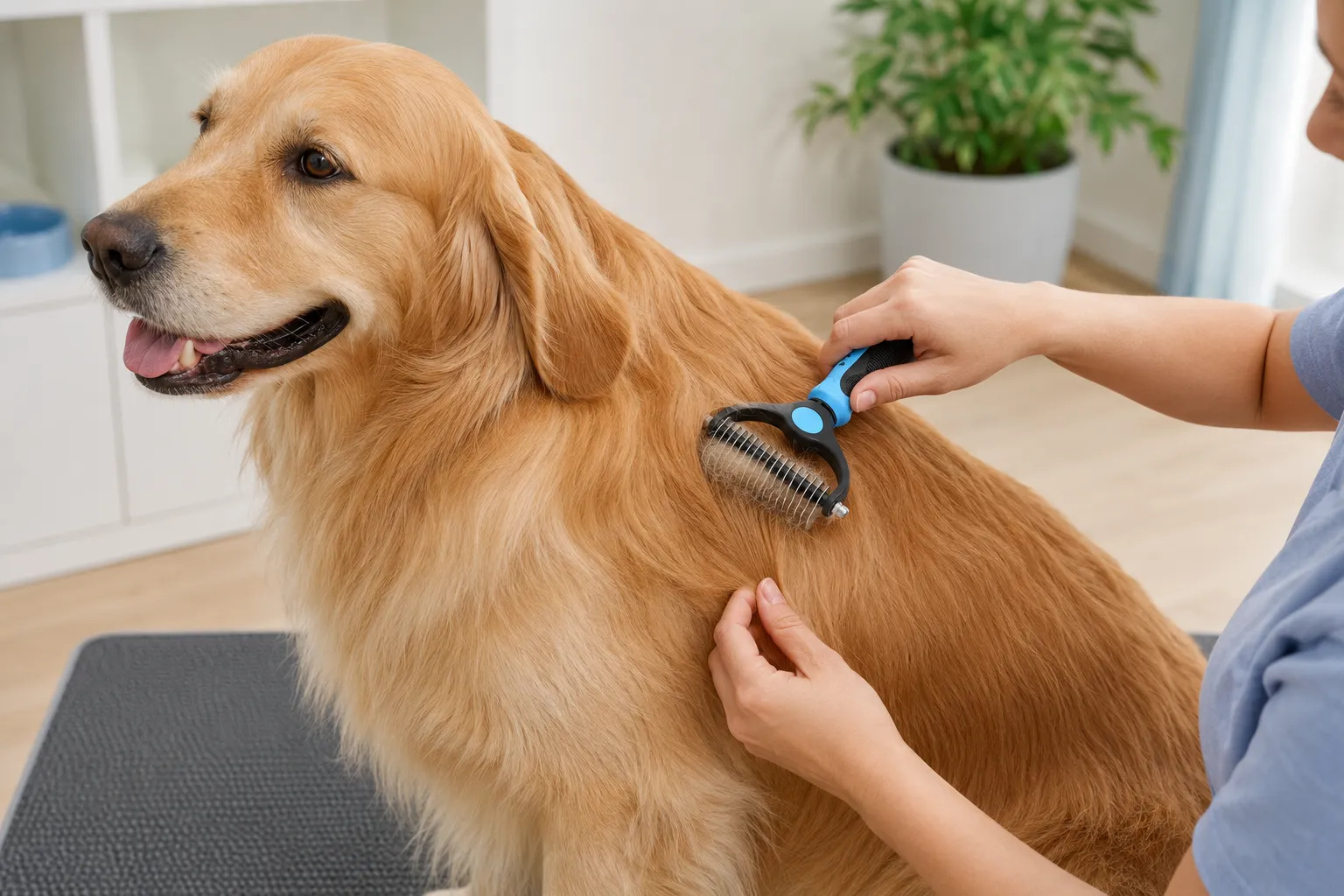
Use an undercoat rake only after confirming that it fits the coat. These tools reach loose undercoat beneath the outer coat, so they are most useful on thick, dense, or double coats with enough depth to keep the teeth from pressing directly against the skin. Choose the side that matches the problem, work in small sections, and stop at resistance.
Quick Answer: Use an undercoat rake on a suitable thick or double coat. Inspect the coat and skin first, then work on a broad, well-coated area with short, slow strokes and very light pressure, generally following hair growth. Keep the rake relatively flat instead of pointing the teeth into the skin. Use a wider dematting side only for a small, manageable tangle and a denser deshedding side for loose undercoat on a tangle-free section. Never pull harder when the rake catches.
Check the Coat Before Using a Rake
A double coat has an outer layer and a softer undercoat, but its length and density vary. The rake teeth should match the coat depth. If they reach the skin too directly, repeatedly snag, or pass through without engaging undercoat, choose another tool.
A rake may suit a thick double coat or a medium or long dense coat with visible soft undercoat. It may be a poor match for very short, sparse, smooth, curly, wool-like, silky, or specialized wire coats. Many short coats are better handled with rubber, bristle, or short-pin tools.
Before starting, separate the hair with your fingers and check for tangles, tight mats, debris, redness, wounds, or scabs. Inspect the rake for bent, rough, or damaged teeth. Begin only when the pet is calm enough for controlled handling.
Understanding the difference between deshedding and dematting also helps. Loose undercoat and a compacted tangle are different problems and should not be treated the same way.
Choose the Side the Coat Actually Needs
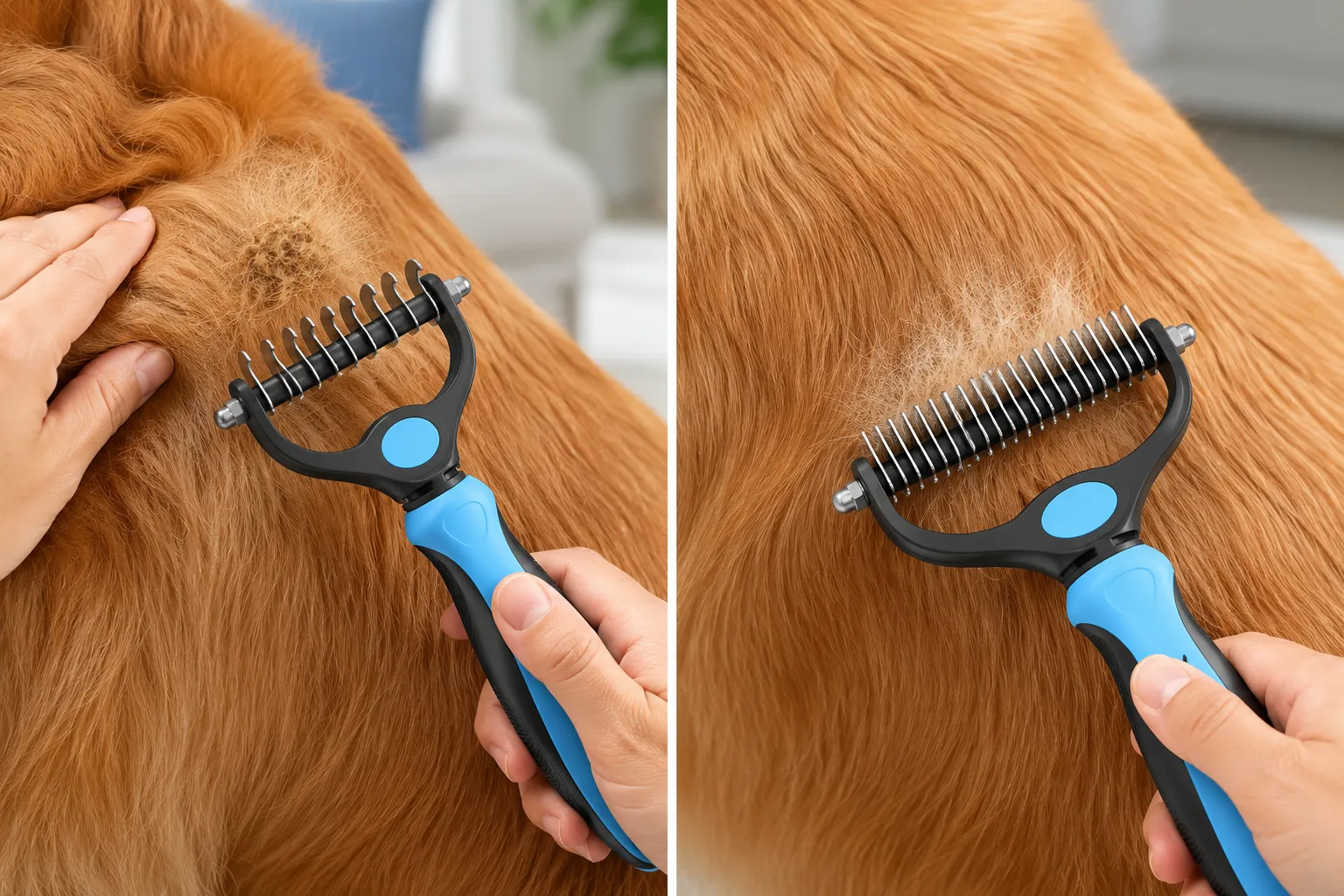
A dual-sided rake does not have a fixed order. Choose the side according to the coat section in front of you.
The wider side is for a small, manageable tangle. Do not use it across the whole body or on a dense, skin-level mat.
The denser side is for loose undercoat on a tangle-free section. It does not need to follow the wider side, and it should not be pulled through a knot or mat.
The Docrok combo uses a wider 9-tooth side for dematting and a denser 17-tooth side for deshedding. That assignment comes from the product configuration and seller information; it does not mean either side fits every coat or mat.
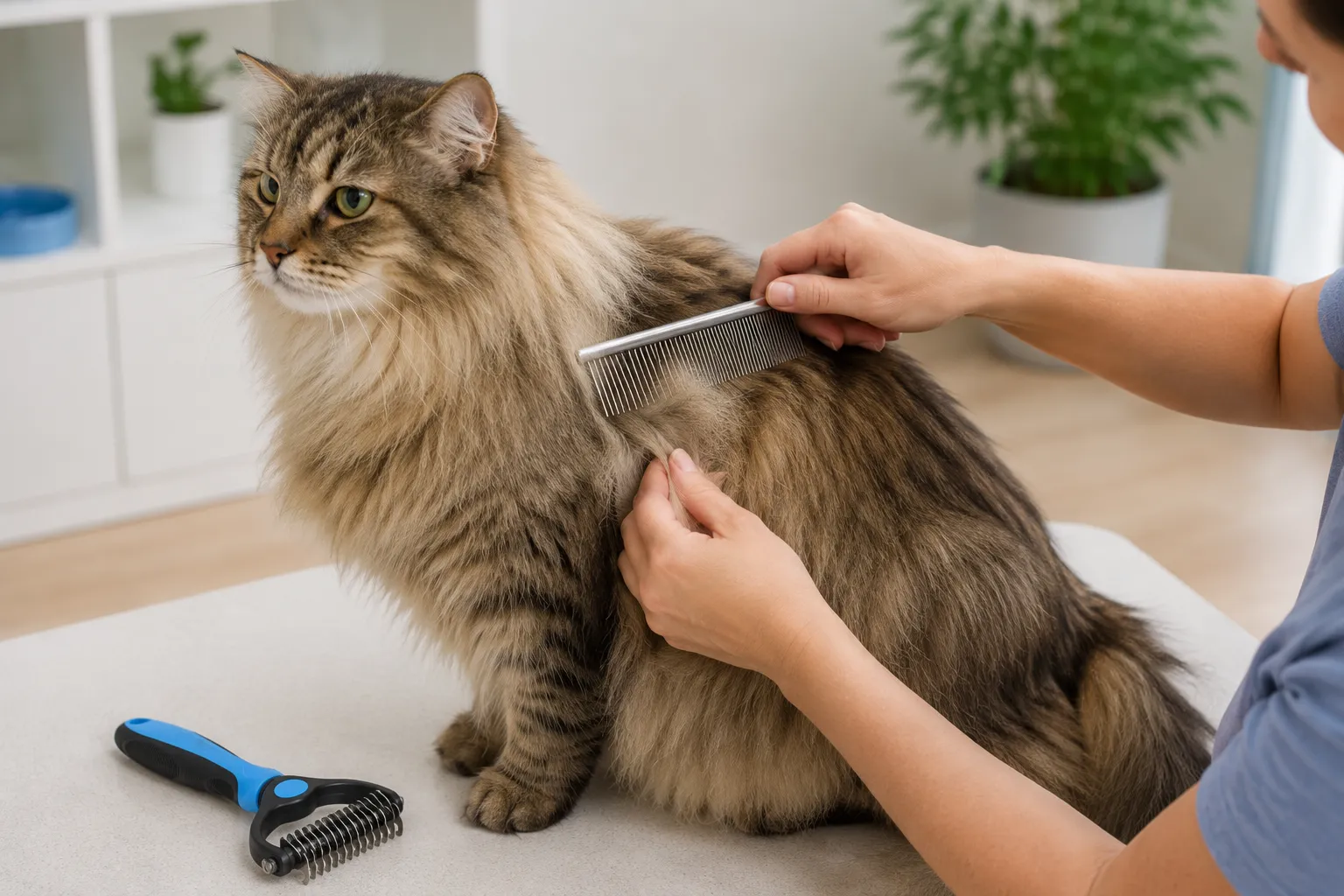
A metal comb can help you decide. Start with its wider-spaced teeth and stop if they catch. After raking, use them again, then try the finer teeth only if the comb passes without pulling. The comb is a checkpoint, not a tool to push through resistance.
Use Light, Controlled Passes on a Suitable Area
Place the pet on a stable, non-slip surface and begin on a broad, well-coated body area. Let the pet see or sniff the tool, and watch its response.
- Work on one visible section. Part longer hair with your fingers so you can see where the teeth will travel. Avoid long, fast strokes across several sections.
- Keep the rake relatively flat. Move the teeth through the coat instead of pointing them directly toward the skin. No exact angle works for every coat.
- Use very light pressure. Do not press a metal rake into the skin. There is no universal pressure measurement for every animal.
- Move slowly in short strokes. Generally follow hair growth. Remove collected hair as needed so you can see what the tool is doing.
- Pause and check. Look at the skin and the pet’s response. Do not rely on a fixed number of passes or continue until no more hair appears.
- Stop at resistance. Lift the rake away and inspect the section. Do not pull harder or repeatedly work the same snag.
As conservative site guidance for this type of rake, avoid the face, eyes, muzzle, ears, paws, between the toes, armpits, lightly coated belly, groin, genital area, and direct pressure over bony joints. Do not use it over wounds, red or inflamed skin, or a mat that prevents you from checking the skin beneath it.
Dog and Cat Differences
Dogs
Dog coats vary greatly, including among double-coated dogs. Short dense, long plush, and specialized wire coats do not need the same tool. Larger dogs may require more sections, but the method stays the same: match the rake to the coat, work slowly, and stop when it catches.
Cats
For a cat, begin with the metal comb rather than assuming a rake is necessary. A rake may suit some medium, long, or dense coats with substantial undercoat, but long hair alone is not enough. Keep the session short and watch for skin twitching, turning toward the tool, moving away, or tension. Stop rather than restraining the cat more firmly. If the comb repeatedly catches or the rake reaches the skin too directly, use another approach.
When to Stop and Seek Help
Stop if the rake repeatedly snags, the skin becomes red, the pet flinches or tries to leave, or you cannot control the tool. Growling, hissing, snapping, scratching, or persistent pulling away also end the session.
A dense mat close to the skin is not a routine home-rake task. Do not pull either side through it, and do not use scissors near a tight mat. Contact a professional groomer when matting is dense, widespread, or too close to the skin to assess safely.
Contact a veterinarian when the skin appears painful, red, broken, wet, bleeding, or otherwise abnormal. Do not diagnose the cause or work over the area with a rake.
Where the Docrok Set Fits
The seller presents the set for medium- and long-haired dogs and cats and other double-coated pets, but individual coat fit still matters. Its two-sided metal comb can locate resistance before raking and check the section afterward.
You can learn how the grooming set works before deciding whether a rake-and-comb format matches your pet’s coat.
Confirm coat suitability, inspect the skin, choose the side for the actual problem, use light controlled strokes, and stop at resistance.
As an Amazon Associate I earn from qualifying purchases.
Sources
- American Kennel Club — How to Choose the Right Dog Brushes
- American Kennel Club — What Is a Double Coat?
- American Kennel Club — How to Groom a Double-Coated Dog
- VCA Animal Hospitals — Grooming and Coat Care for Your Cat
- PetMD — Pet Grooming: How to Handle Matting in Dogs and Cats
- Amazon — Docrok Pet Grooming Combo