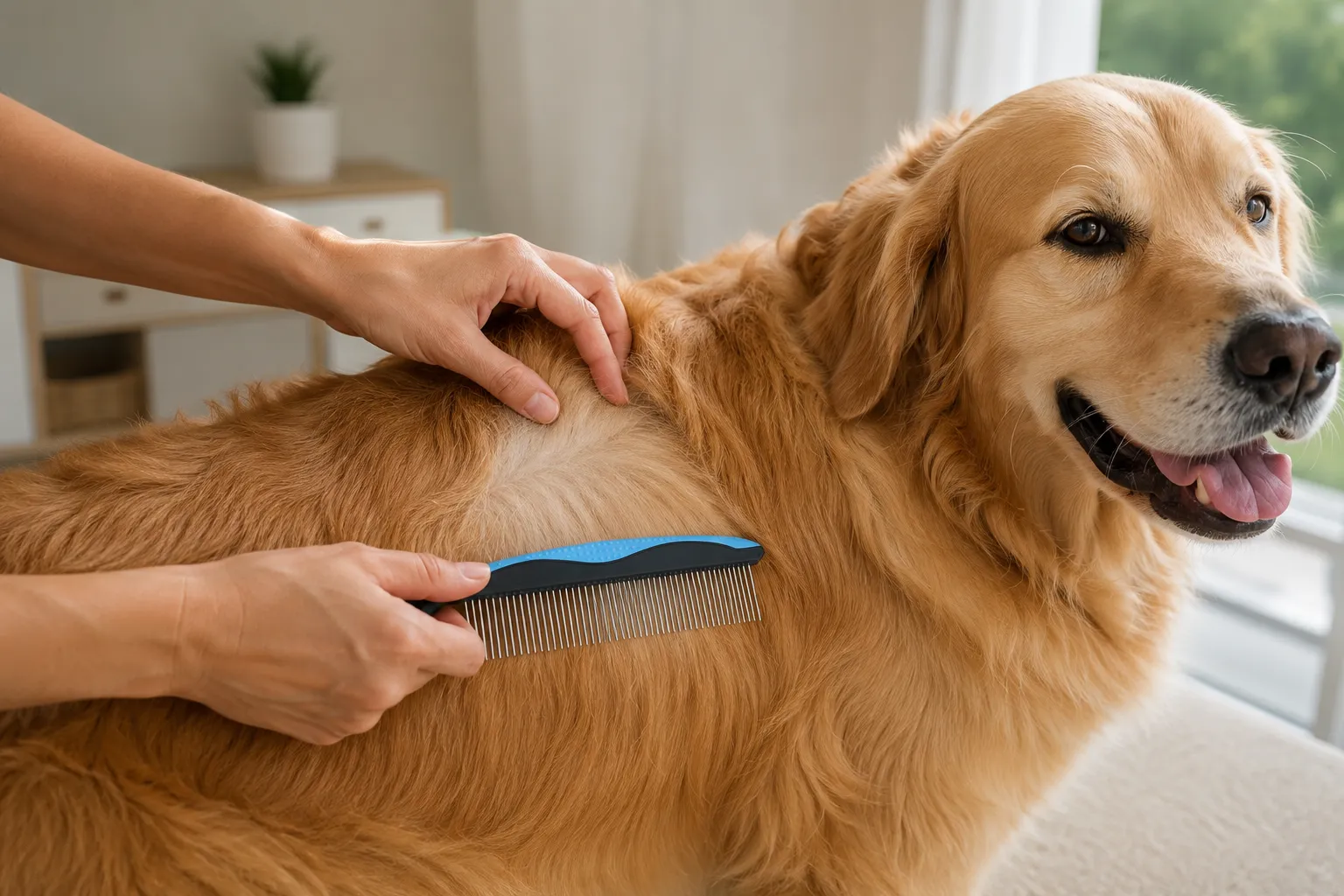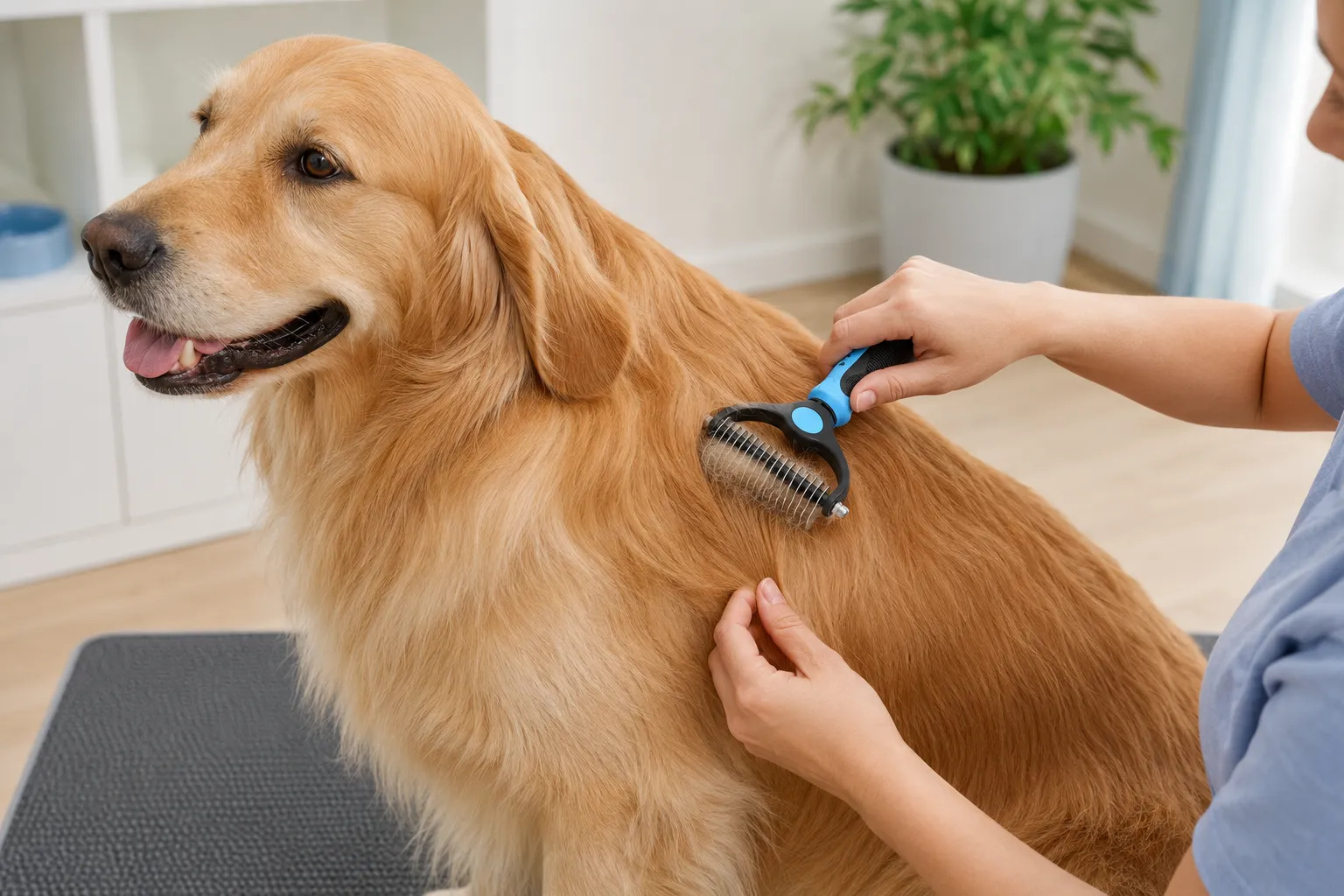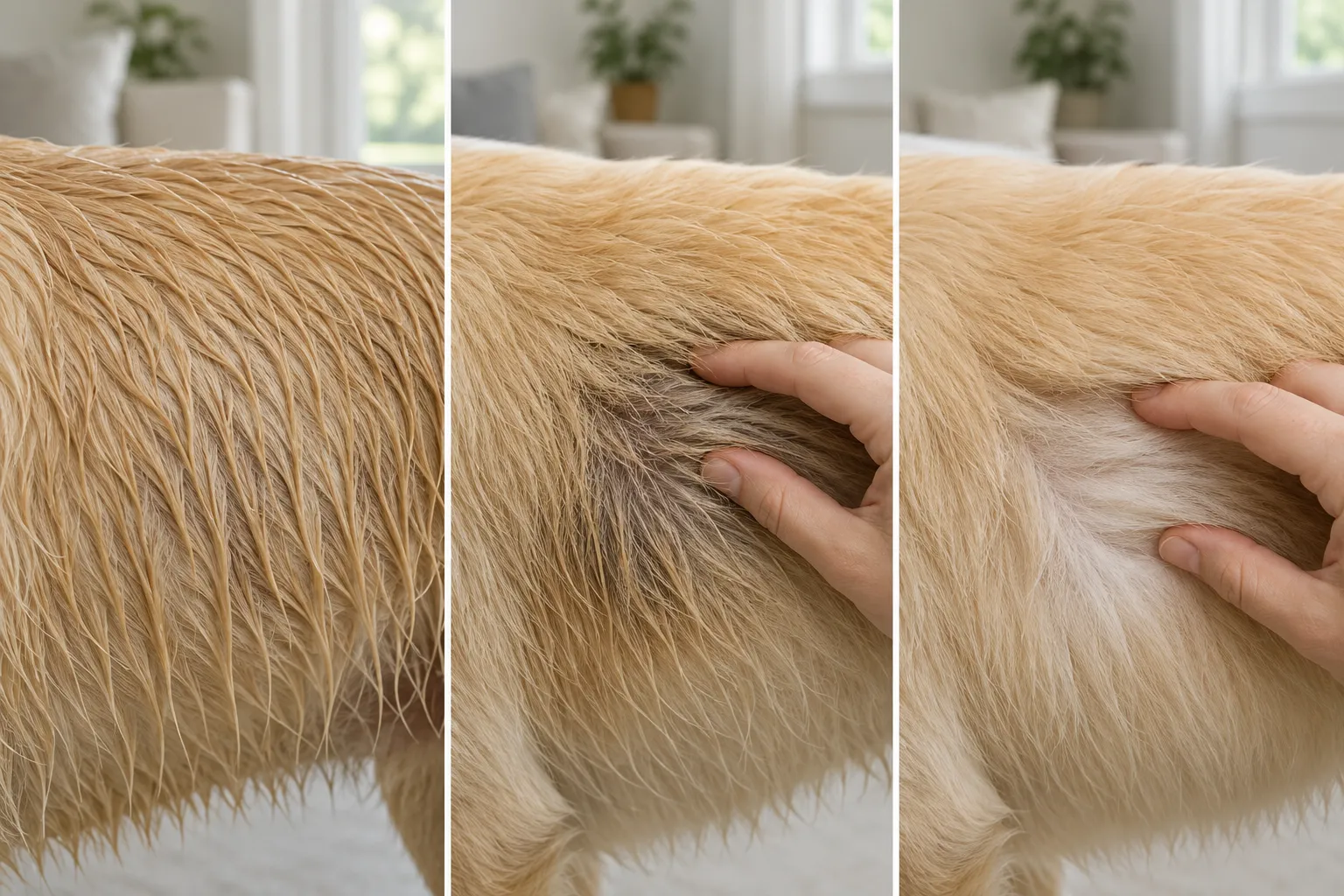
There is no universal daily or weekly schedule for an undercoat rake. Use it when the coat shows a real need for loose-undercoat removal, based on coat type, shedding, skin condition, tangles, tooth depth, and the pet’s response.
Quick Answer: Check the coat before each session and use an undercoat rake only when loose undercoat is present, the coat suits the tooth depth, the skin looks normal, and the section is free of tangles. Begin with a small test area and a minimal number of light passes, then stop and reassess. During a heavy seasonal shed, a suitable coat may need more frequent ordinary brushing or combing, but that does not automatically mean daily rake use. Stop for repeated snagging, redness, sensitivity, uneven thinning, or a pet that pulls away.
There Is No Universal Rake Schedule
Grooming frequency varies by coat type, season, environment, and the individual animal. A calendar can remind you to inspect the coat, but it should not decide whether the rake is used.
Frequent grooming does not automatically mean frequent rake use. Combs and other coat-appropriate brushes may handle routine maintenance while the rake remains selective.
Use Coat Condition Instead of the Calendar
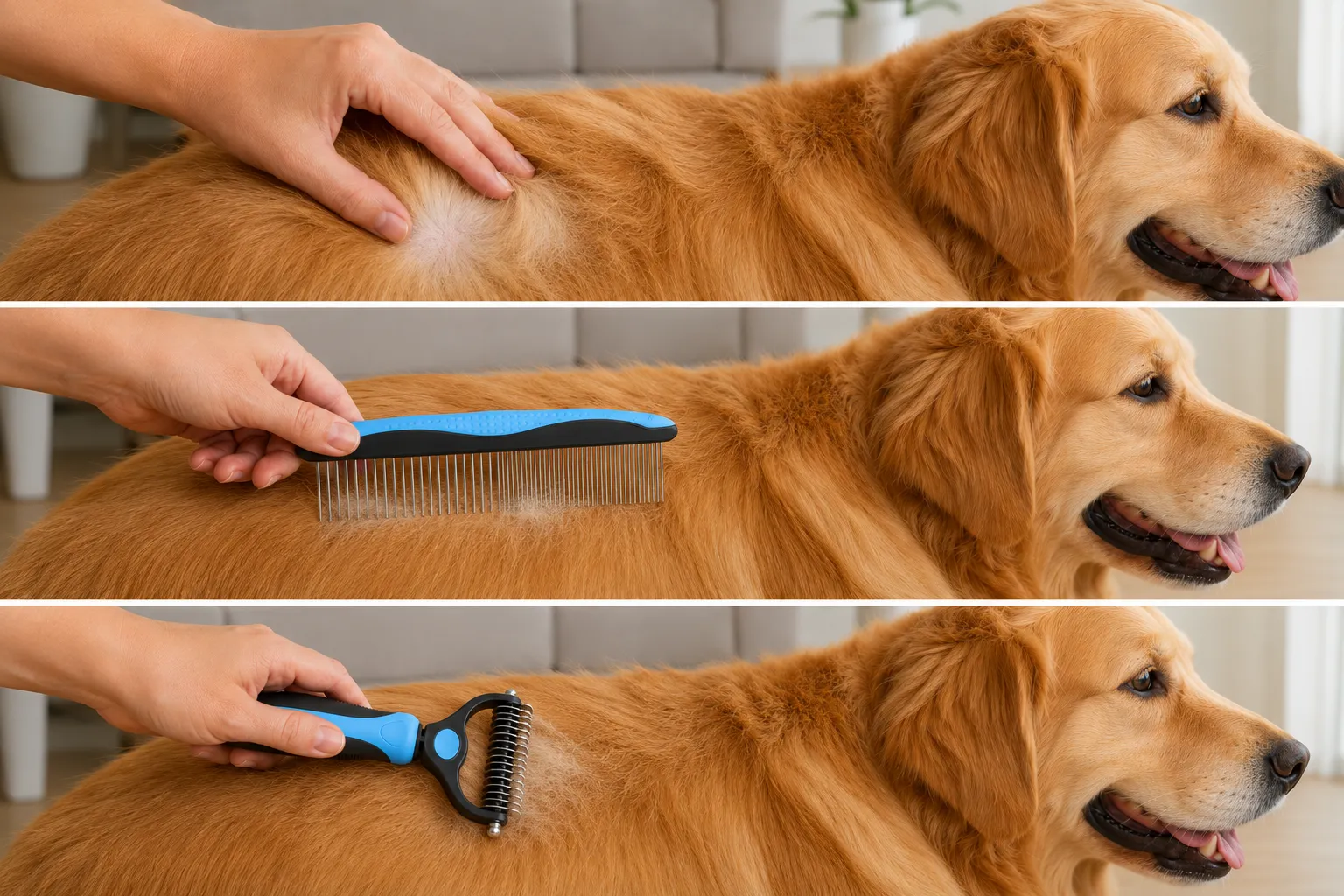
Before reaching for the rake, check for loose undercoat, tangles, normal-looking skin, suitable tooth depth, enough coat density, and comfortable behavior.
The wide metal-comb section can locate resistance before raking. If it catches, stop and inspect. Short, sparse, fine, curly, wire, or specialized coats may need another tool.
Signs a Rake Session May Be Useful
A rake session may be useful when soft loose undercoat is releasing, the wide comb passes freely, the skin looks normal, the coat is deep enough for the teeth, and the pet accepts gentle handling.
Household hair alone does not prove the rake is needed. Confirm with your hands and the comb, then test one small area with a minimal number of light passes before reassessing.
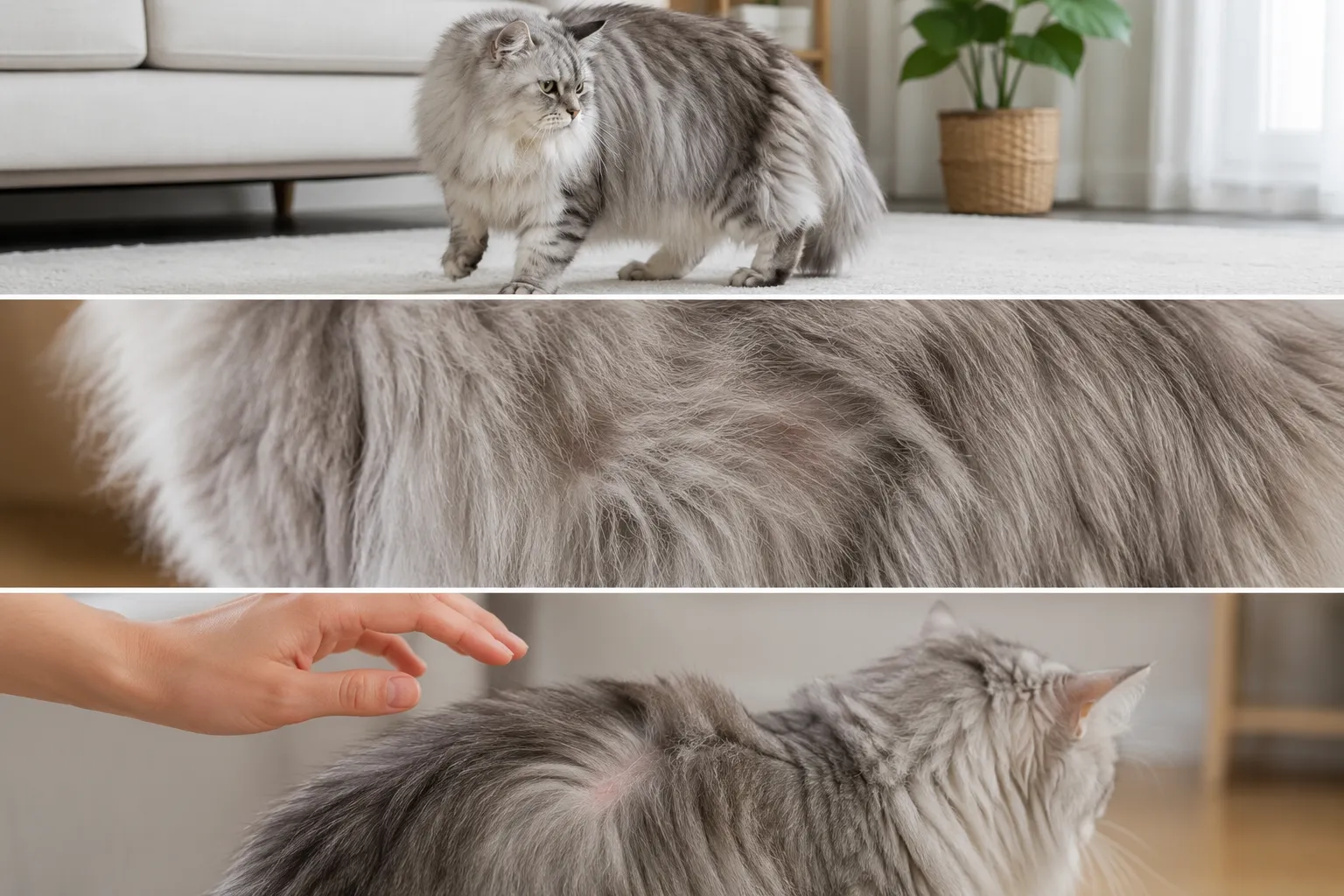
Signs You Are Using It Too Often or Too Long
Stop when continued raking produces warnings instead of a useful loose-undercoat benefit. Watch for redness, sensitivity, repeated snagging, increasing pressure, uneven thinning, attached hairs catching, frayed-looking hair, flinching, pulling away, or attempts to leave.
Do not continue until no hair appears. Slower collection can be one clue to stop, but skin, coat appearance, and behavior matter more than the hair pile.
How Season, Coat, Dogs, and Cats Change the Answer
During heavier seasonal shedding, ordinary brushing or combing may need to increase, and a suitable coat may benefit from more selective rake use. That still does not mean daily whole-body raking.
Dense or long double coats may need more checks and targeted rake use, while short double coats may suit another tool. For cats, keep rake use optional, brief, and behavior-led. Assess every pet individually rather than assigning a species-wide schedule.
More frequent coat checks during shedding periods can reveal whether loose undercoat is actually increasing. When the comb still passes freely and little loose hair is present, adding another rake session may offer no clear benefit.
What the Docrok Listing Confirms
The Amazon listing assigns the dense 17-tooth side to deshedding and the wide 9-tooth side to tangles, but it provides no verified daily, weekly, or session-length schedule.
Use the 17-tooth side only when loose undercoat is present in a suitable, tangle-free section. Use the 9-tooth side only for a manageable tangle. Do not transfer another manufacturer’s schedule to this tool.
You can view the Docrok grooming brush and metal comb combo to see the separate functions of the two rake sides and comb.
Final Takeaway
Use an undercoat rake when the coat needs it, not according to a universal calendar. Inspect first, confirm that loose undercoat is present, start with a small area, and stop for skin, coat, or behavior warnings. Routine combing may happen more often than selective rake use.
As an Amazon Associate I earn from qualifying purchases.
Sources
- VCA Animal Hospitals — Grooming and Coat Care for Your Dog
- VCA Animal Hospitals — Grooming and Coat Care for Your Cat
- American Kennel Club — How to Choose the Right Dog Brush for Your Pet
- American Kennel Club — Dog Shedding: What to Expect and How to Manage It
- Blue Cross — How to Groom Your Cat
- Amazon — Docrok Pet Grooming Combo