A useful double-coated dog grooming routine starts with inspection. Because double coats vary in length, density, and structure, the sequence should follow the coat in front of you.
Use the metal comb to find resistance, handle only manageable tangles, and remove loose undercoat only from tangle-free sections.
Quick Answer: Start by checking that your dog’s coat suits the tools and that the skin looks normal. Use the wider-spaced part of the metal comb to locate tangles and see where the coat resists. Work only manageable tangles with the 9-tooth side, then use the 17-tooth side for loose undercoat in tangle-free sections. Move with the direction of hair growth using light pressure and controlled passes. Finish with another comb check. Stop if a tool repeatedly catches, the skin becomes red, or the dog shows discomfort. If the coat is already free of tangles, skip the dematting side.
Inspect the Coat and Skin
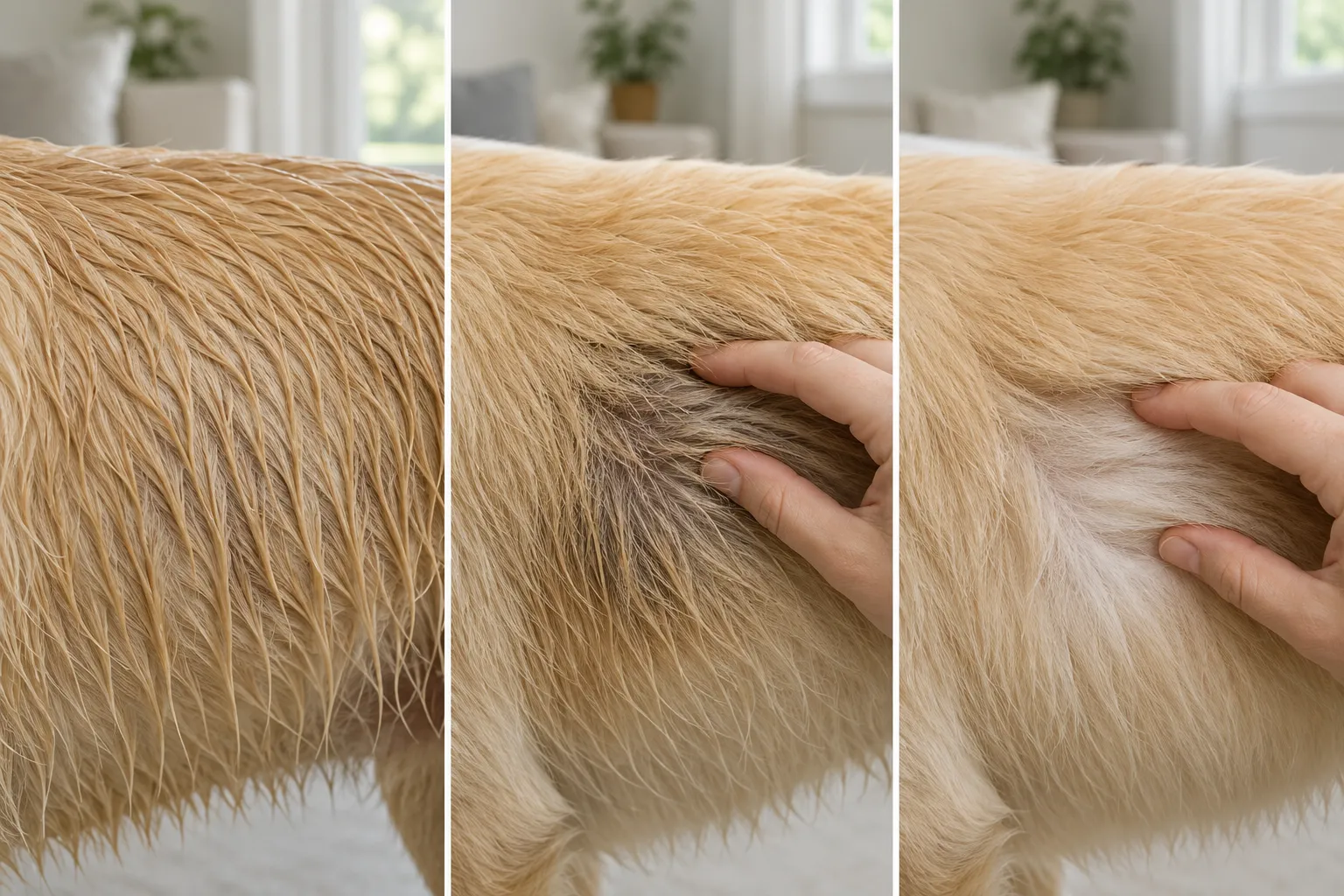
Begin by separating the outer coat with your fingers and checking what is underneath. Look for loose undercoat, tangles, mats, burrs, debris, redness, scabs, sore areas, dampness, unusual odor, or visibly thinning patches.
A double coat has a softer inner layer beneath an outer coat, but different double coats may require different tools. Tooth depth should match the actual coat rather than the label alone.
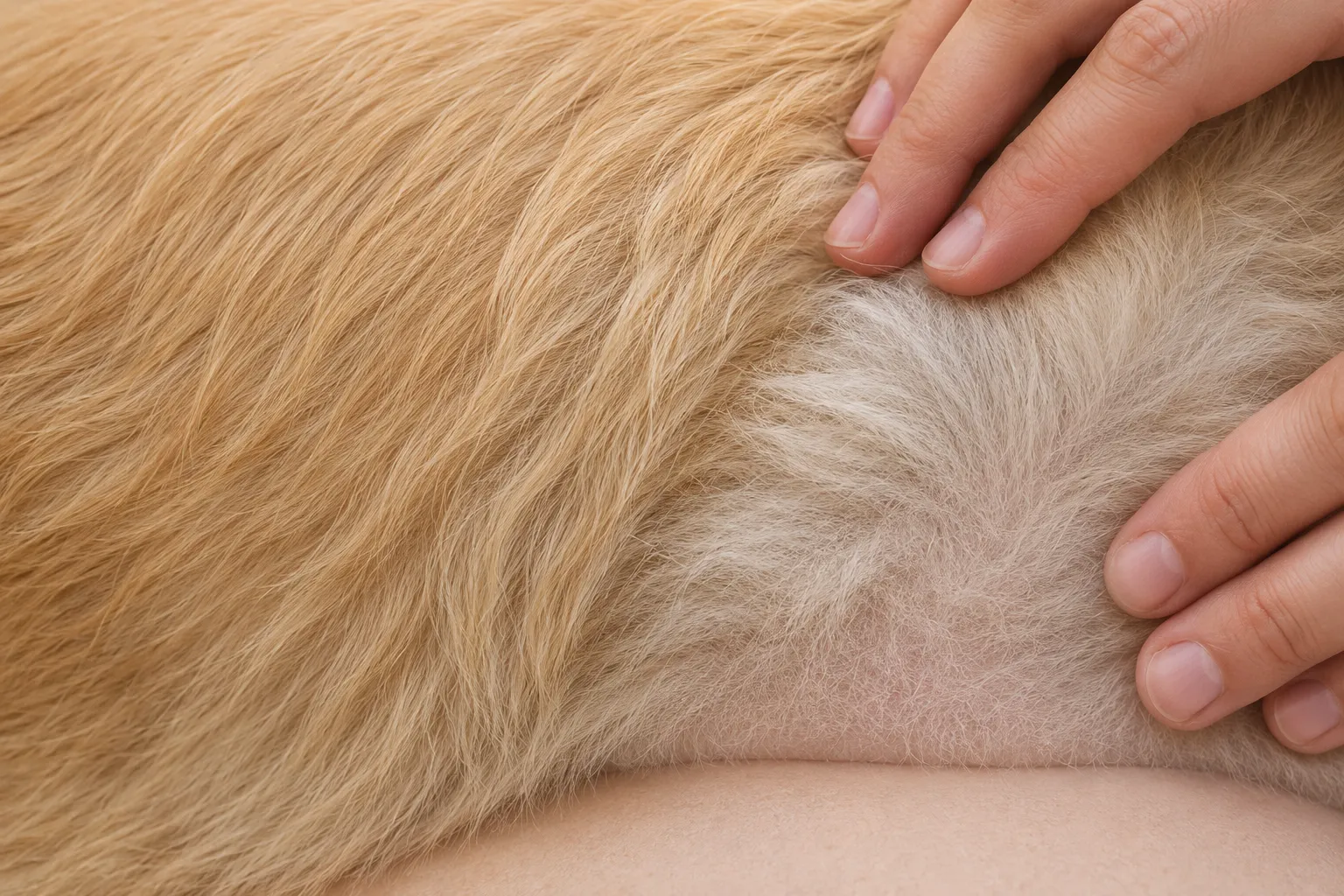
Do not rake over red, broken, painful, or otherwise abnormal skin. Sudden bald patches, wounds, discharge, or major coat changes should be discussed with a veterinarian. Also check the tools for bent, rough, or damaged teeth.
Comb or Brush Before Raking
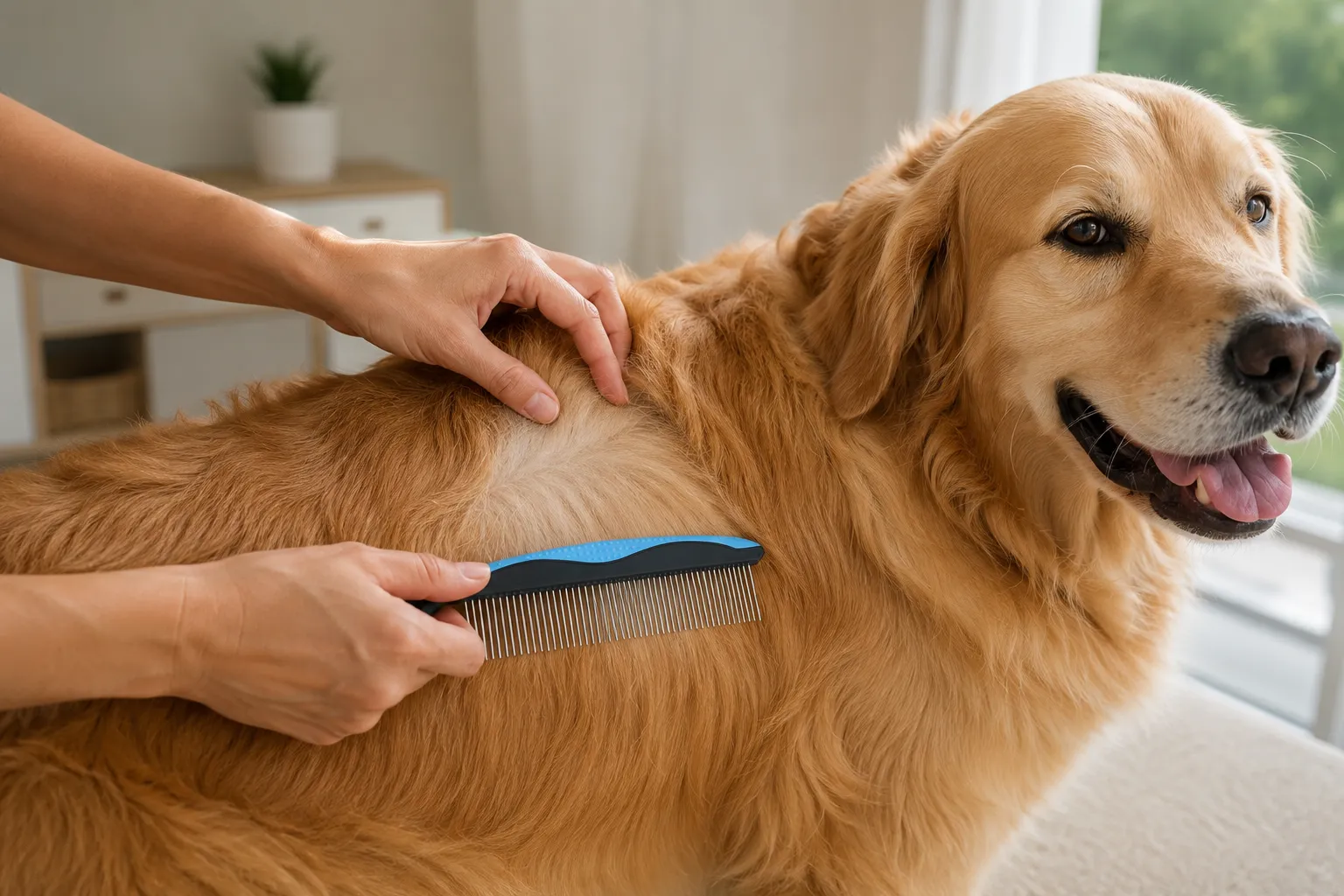
Start with the wider-spaced section of the metal comb. Work through one visible area without forcing the teeth. The comb is a checkpoint that helps you decide what the section needs.
A freely moving comb may mean the area is ready for loose-undercoat removal. A catch at one spot may indicate a tangle; broad resistance may mean packed coat or matting.
On medium and long coats, part the outer hair and check below the surface. Surface brushing can leave hidden resistance underneath.
The finer-spaced comb section comes later. Use it only after the wider teeth pass through without force. If the wide section catches, stop and inspect instead of switching to finer teeth.
Handle Only Manageable Tangles
A manageable tangle is small and localized, with skin that can still be checked. Its edge begins to separate gently, and the tool remains easy to control.
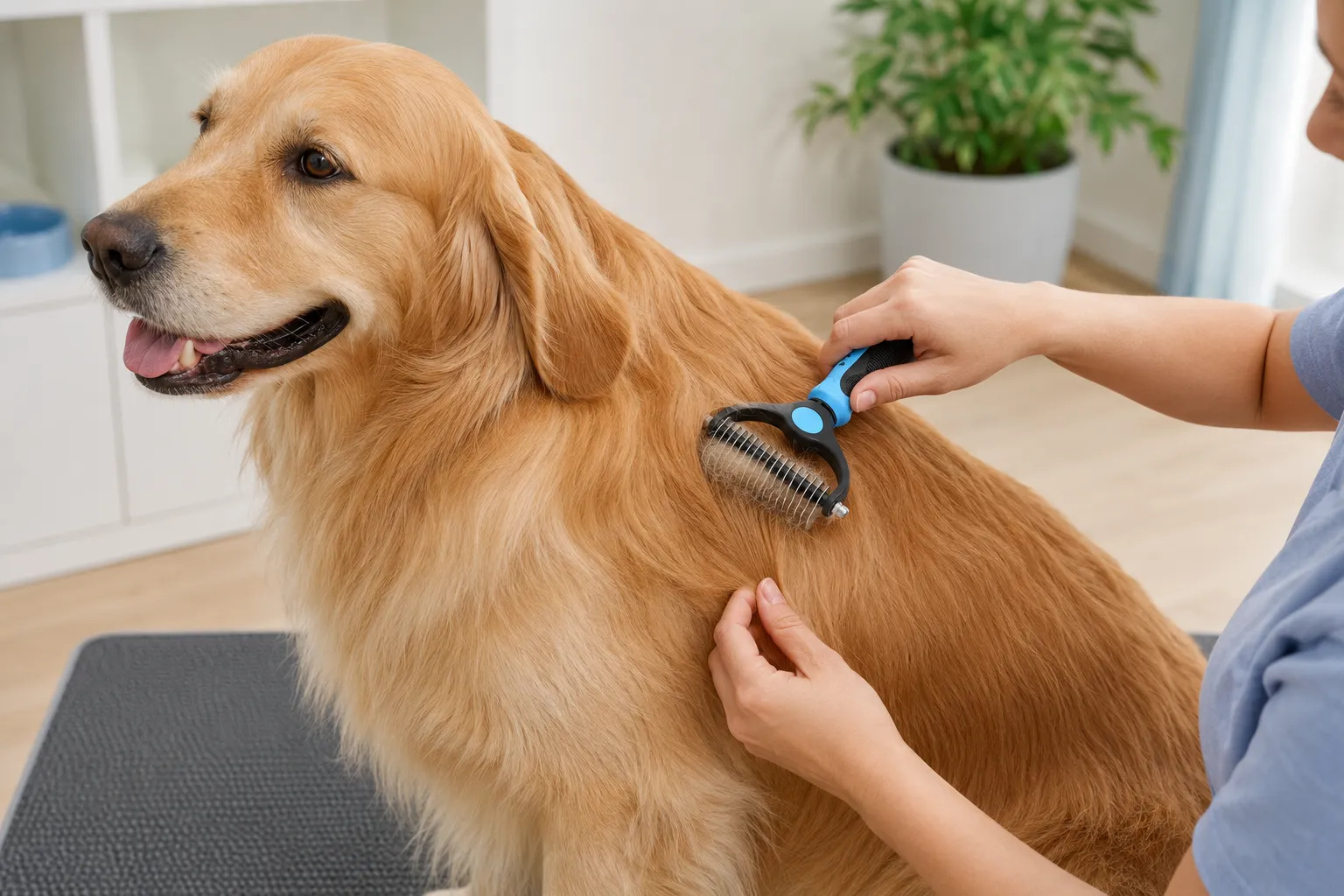
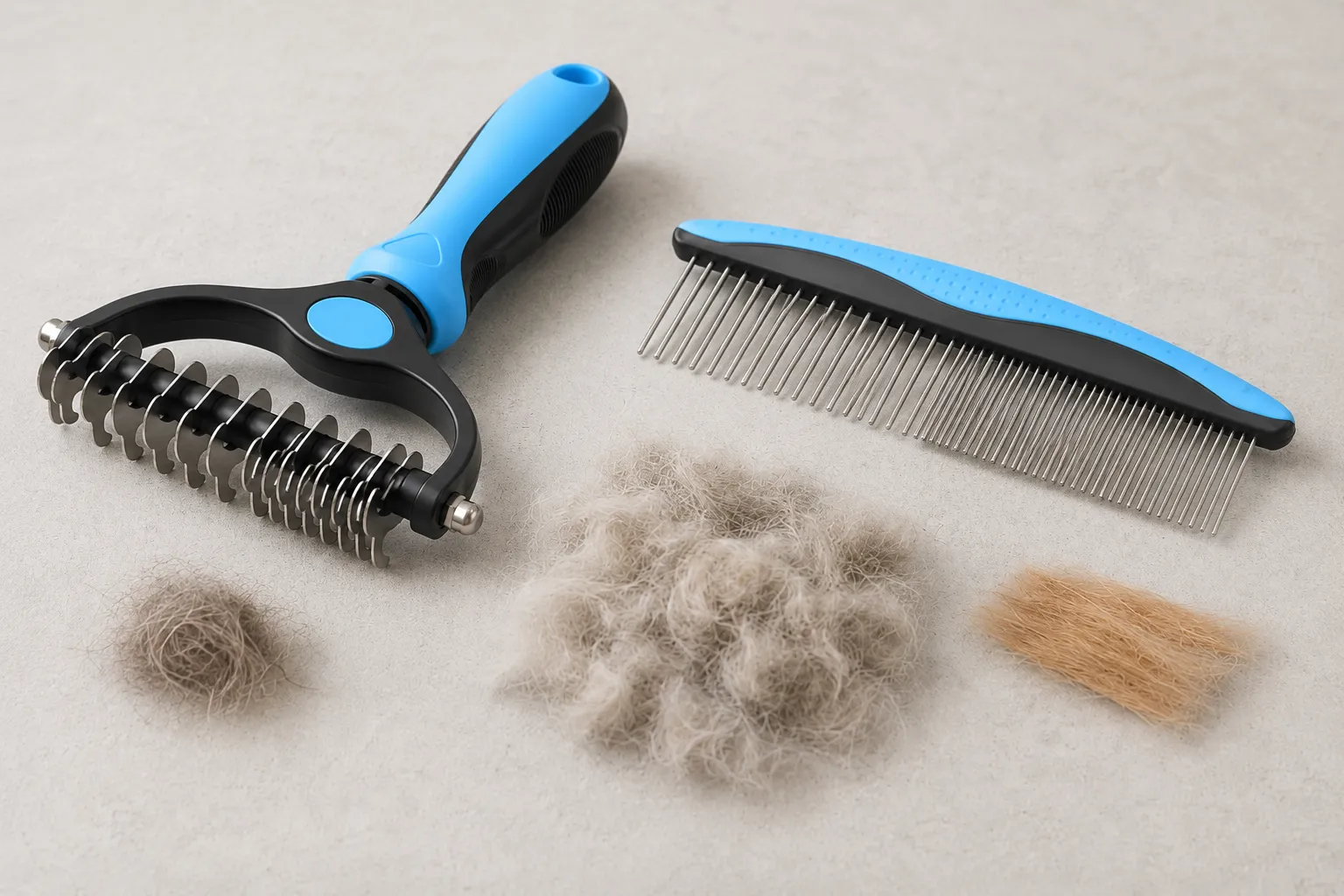
According to the seller’s product information, the wider side of the Docrok rake is intended for mats and tangles. Project photographs confirm that this is the 9-tooth side.
Use it only when a manageable tangle is actually present. If the comb finds no tangle, skip this step.
Do not use the 9-tooth side on dense, widespread, pelted, painful, or skin-level matting. Severe matting belongs with a professional groomer.
This routine does not include severe-mat removal.
Remove Loose Undercoat Selectively
Once a section is free of tangles, use the denser 17-tooth side for loose undercoat. The Amazon seller assigns this side to deshedding, while the exact tooth count is confirmed by the project photographs.
Work in a small, visible section and generally follow the direction of hair growth. Let the teeth move through the coat rather than pressing the rake into the skin.
After a controlled pass:
- Clear the collected hair from the rake.
- Check whether the tool moved freely.
- Look at the coat and skin.
- Decide whether the section needs another pass.
There is no universal pressure, pass count, or session length. Continue only while the rake moves freely, the skin remains normal, and loose undercoat is present.
Do not stay on one productive patch simply because hair keeps collecting. The goal is an even coat—not the largest possible pile of hair.
Finish, Recheck, and Adjust Frequency
Return to the metal comb after raking. Begin with the wider teeth and check whether the section passes more freely. If they move without resistance, the finer section can be used where appropriate.
A section may be finished when:
- the comb passes without force;
- loose-hair collection has slowed;
- the coat looks even rather than sharply thinned;
- the skin remains normal;
- the dog remains comfortable.
Do not define “finished” as no hair appearing on the comb or rake. The amount of loose hair varies by coat, season, environment, and the individual dog.
Base future sessions on coat condition rather than a fixed calendar. Short double coats may need another tool, while wire coats may require specialized guidance.
You can view the Docrok grooming brush and metal comb combo to see how the rake and comb are arranged within this routine.
Stopping Signs and Professional Help
Stop the session if the rake or comb repeatedly catches, the dog becomes tense, pulls away, turns sharply toward the tool, growls, snaps, or tries to leave.
Also stop for:
- redness or irritation;
- a scratch or sore area;
- unusual hair loss or a visibly thinned patch;
- pain when the coat is touched;
- dense matting close to the skin;
- a coat section that cannot be opened without force.
A groomer can assess packed undercoat, extensive matting, difficult coat types, or a dog that cannot tolerate the routine. Contact a veterinarian for pain, broken skin, bleeding, discharge, unusual odor, or sudden coat changes.
Do not force a resisting dog to continue or try to finish a large coat in one sitting.
Final Takeaway
A simple double-coated dog grooming routine follows the condition of the coat:
- Inspect the coat and skin.
- Check with the wider metal-comb teeth.
- Use the 9-tooth side only for a manageable tangle.
- Use the 17-tooth side only for loose undercoat in a tangle-free section.
- Recheck with the comb and stop before irritation or repeated snagging begins.
As an Amazon Associate I earn from qualifying purchases.
Sources
- VCA Animal Hospitals — Grooming and Coat Care for Your Dog
- American Kennel Club — How to Groom a Double-Coated Dog
- American Kennel Club — How to Choose the Right Dog Brushes
- American Kennel Club — Dog Shedding: What to Expect and How to Manage It
- PetMD — Pet Grooming: How to Handle Matting in Dogs and Cats
- Blue Cross — How to Groom a Dog
- American Kennel Club — National Core Professional Dog Grooming Educational Standards
- Amazon — Docrok Pet Grooming Combo