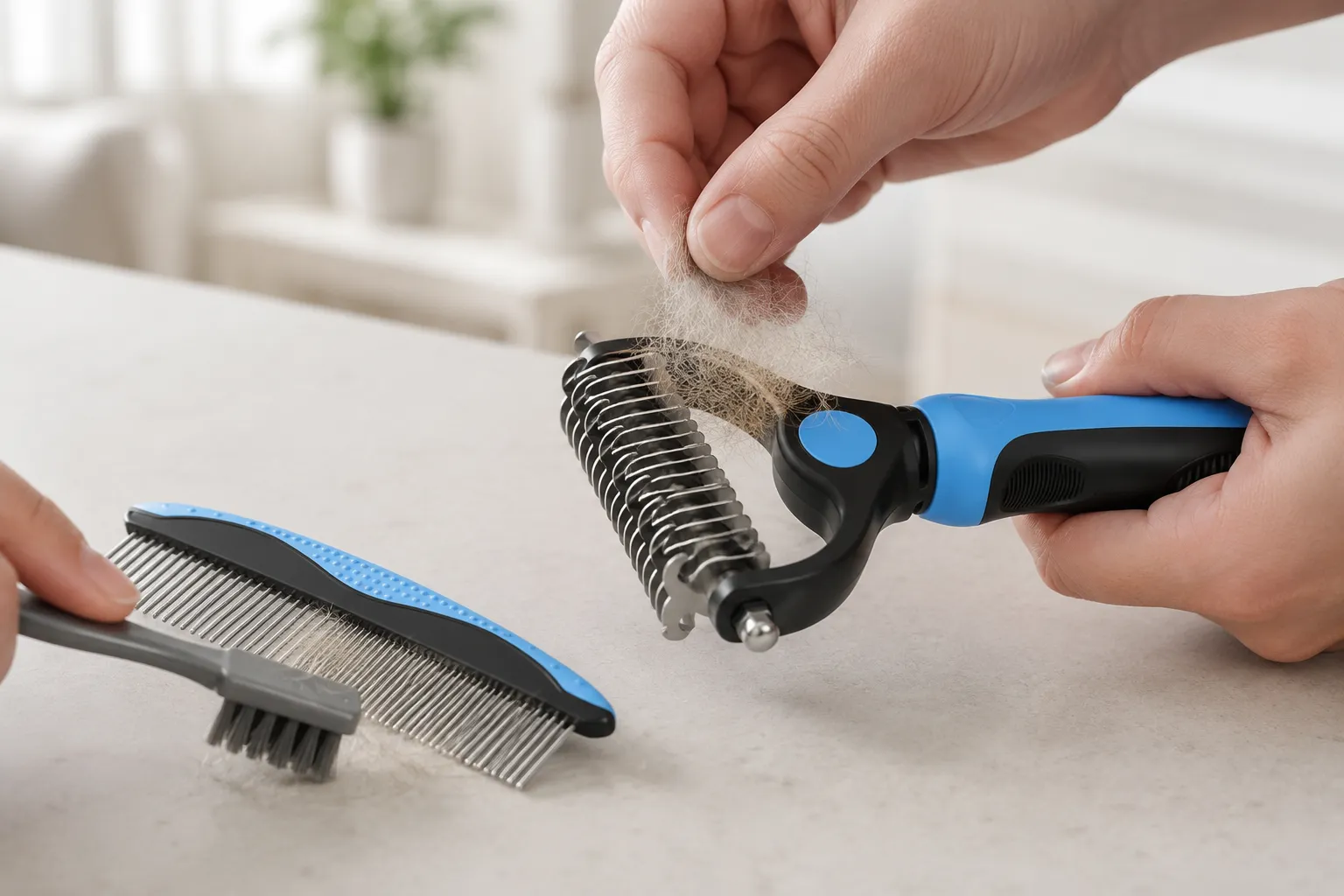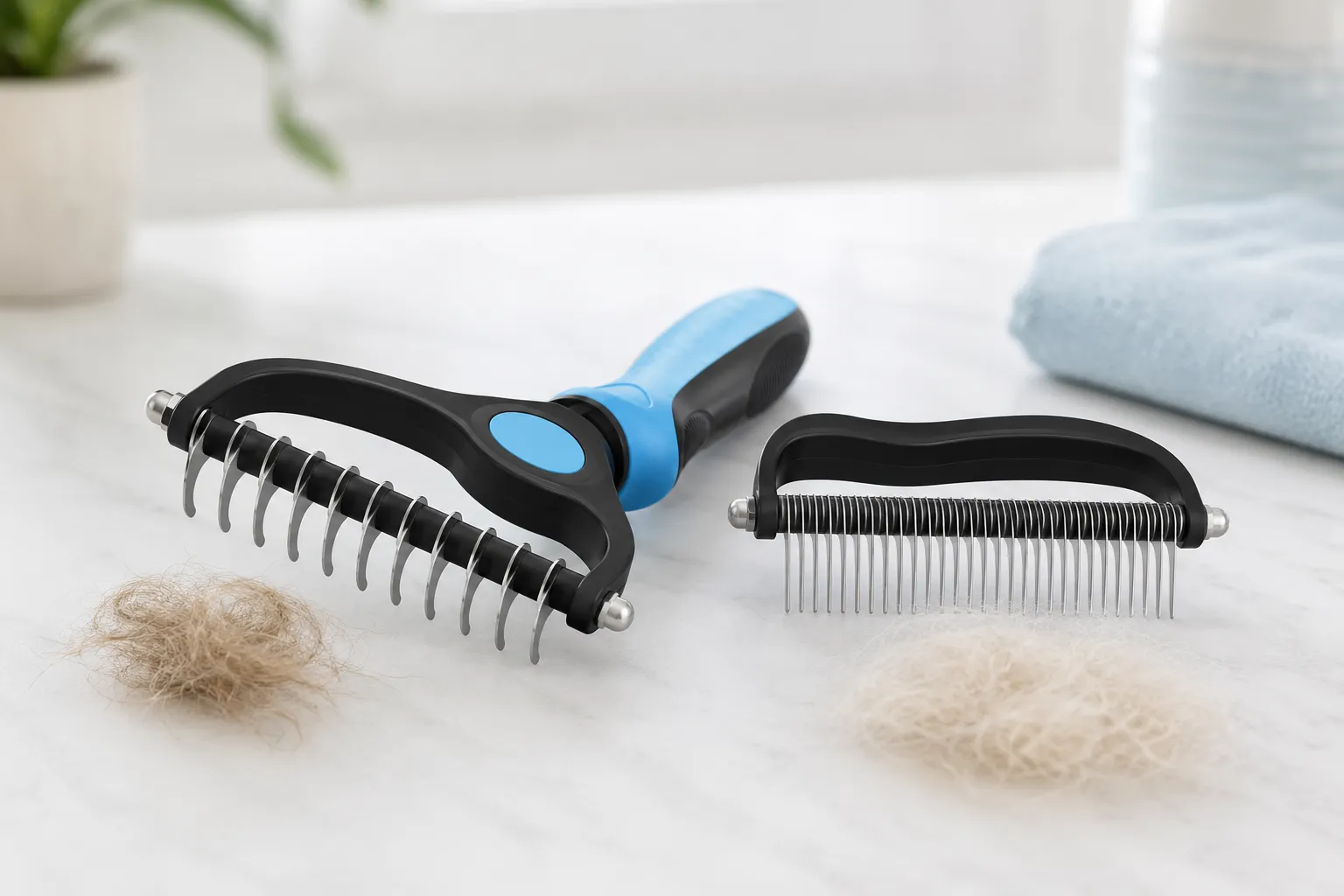
On the Docrok rake, the wider 9-tooth side is intended for manageable tangles, while the denser 17-tooth side is intended for loose undercoat. These numbers describe this product’s layout; they are not a universal safety rating, and other dual-sided rakes may use the same tooth counts differently.
Quick Answer: Use the 9-tooth side on a small, manageable tangle where you can see and control the tool path. Use the 17-tooth side only on a suitable, tangle-free section with loose undercoat. You do not need both sides in every session. Stop if the rake repeatedly catches, pulls the skin, causes redness, or makes the pet uncomfortable. A tight mat close to the skin is not a routine home-rake task.
The coat problem—not the number alone—determines which side to use.
The Basic Difference Between 9 and 17 Teeth
| Feature | 9-tooth side | 17-tooth side |
|---|---|---|
| Tooth spacing | Wider | Closer |
| Intended Docrok use | Manageable tangles | Loose-undercoat removal |
| Working area | Small, controlled section | Broader, tangle-free section |
| Use through a tight mat? | No | No |
| Must it be used first? | No | No |
Wider spacing helps the 9-tooth side approach localized resistance without putting a dense row of teeth into the same spot. Closer spacing lets the 17-tooth side contact more loose hair across a coat section.
Tooth length, coat depth, skin condition, and how freely the tool moves still matter. See the difference between deshedding and dematting for a fuller explanation of the two coat problems.
When to Use the 9-Tooth Side
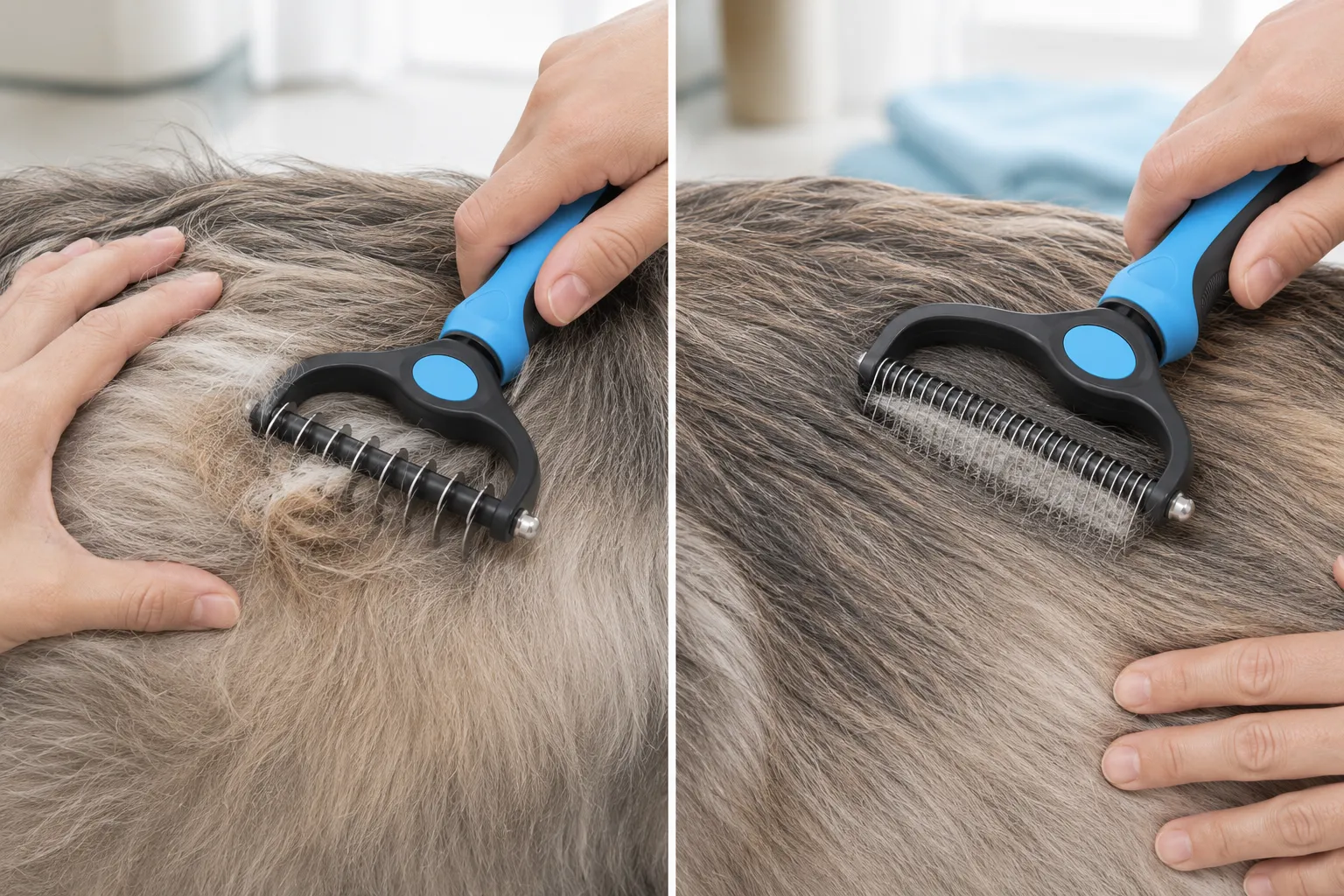
Use the 9-tooth side only for a small, localized, manageable tangle. You should be able to part the coat, check the skin, and see where the teeth will travel. The tool should move without force, and the pet should remain comfortable.
Its purpose is controlled dematting, not automatic whole-body raking. Skip this side when the section is already free of tangles.
Do not use it on dense or widespread matting, a tight mat close to the skin, irritated skin, or any section where it repeatedly catches. A small mat can still be too tight for home grooming; size alone does not determine whether it is manageable.
When to Use the 17-Tooth Side
The 17-tooth side is for loose undercoat in a suitable, tangle-free section. It works best when the coat has enough depth for the teeth and the rake moves freely without reaching the skin too directly.
Use it on a broad, well-coated body area only after checking for knots or mats. It is not a finishing tool for compacted hair and should not be pulled through a mat.
If the dense side catches, stop and inspect. Do not increase pressure or use a back-and-forth sawing motion. The section may contain a hidden tangle, or the tooth length and spacing may not suit that coat.
For general movement and pressure guidance, follow how to use an undercoat rake.
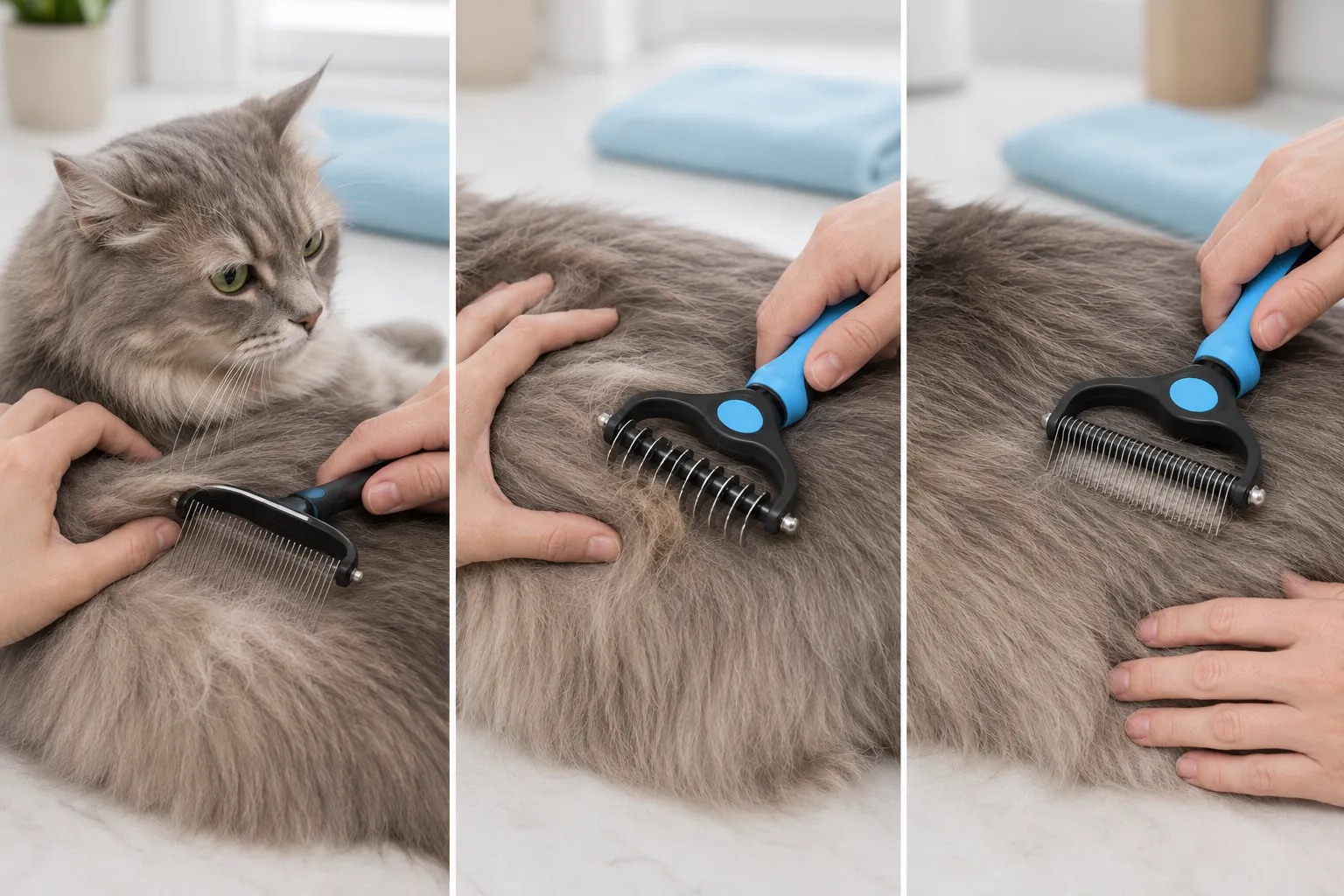
Do You Need Both Sides in One Session?
No. There is no required order.
If a section is tangle-free and contains loose undercoat, use the 17-tooth side without using the 9-tooth side first. If a manageable tangle is present but there is little loose undercoat, you may use only the 9-tooth side.
Different areas can also need different choices. One section may contain a localized tangle while another is already clear and only holds loose hair. Assess each area instead of automatically moving from nine teeth to seventeen.
Use the Metal Comb to Decide and Recheck
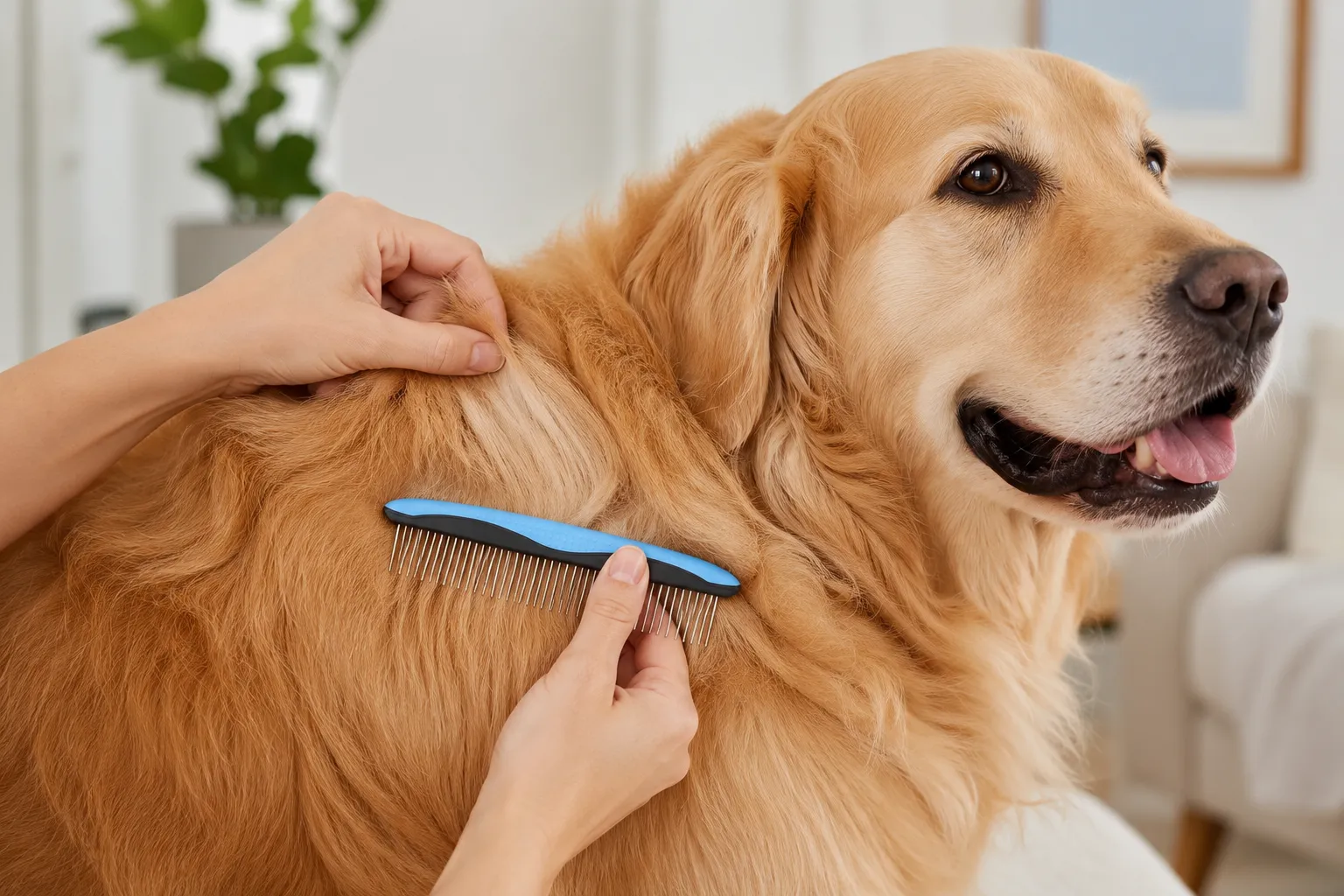
The included two-sided metal comb can act as a checkpoint before and after either rake side.
Start with the wider-spaced comb teeth. If they pass through without fixed resistance, the section may be ready for the 17-tooth side when loose undercoat is present. If the comb catches, stop and inspect rather than pushing through.
After raking, check the section again with the wider teeth. Use the finer side only after the wider side passes freely. The comb can reveal a hidden tangle beneath the surface, but it should also stop at resistance.
The Docrok grooming brush and metal comb combo includes both tools for this check-and-recheck approach.
Limits and Stopping Signs
Neither side suits every coat. Very short or sparse coats, coats with little undercoat, fine coats that repeatedly snag, and specialized coat types may need another tool. Long hair or a double coat alone does not guarantee a good fit.
Stop if either side repeatedly catches, pulls the skin, leaves redness, or causes the pet to flinch, pull away, growl, hiss, scratch, snap, or try to leave. Do not use the rake over red, broken, painful, wet, or otherwise abnormal skin.
Keep both sides away from sensitive or lightly coated areas. Do not use scissors near a tight mat. Dense, widespread, pelted, or skin-level matting should be assessed by a professional groomer, while painful or abnormal skin should be assessed by a veterinarian.
Tooth count does not guarantee safety or function. Fuller Brush, for example, assigns a 17-tooth side to smaller tangles rather than deshedding. That commercial counterexample shows why the instructions for the specific tool matter more than the number alone.
Final Takeaway
For this rake:
- 9 teeth: a small, manageable tangle.
- 17 teeth: loose undercoat on a suitable, tangle-free section.
- Neither side: a tight mat, abnormal skin, repeated snagging, or an unsuitable coat.
Use only the side the coat needs, and skip either side when it does not fit the section.
As an Amazon Associate I earn from qualifying purchases.
Sources
- VCA Animal Hospitals — Grooming and Coat Care for Your Dog
- VCA Animal Hospitals — Grooming and Coat Care for Your Cat
- American Kennel Club — How to Choose the Right Dog Brushes
- American Kennel Club — Dog Shedding: What to Expect and How to Manage It
- Amazon — Docrok Pet Grooming Combo
- Fuller Brush — Pet Dematting Comb